

The famous acronym GIGO is from the computer world and stands for Garbage In – Garbage Out. GIGO has never been more appropriate then in my world of custom drapery design and fabrication. I am referring to receiving little or no instructions in the form of a work order, purchase order or specification and being expected to fabricate what is in the mind of the architect/designer (A/D) and consequently what has been communicated to the client.
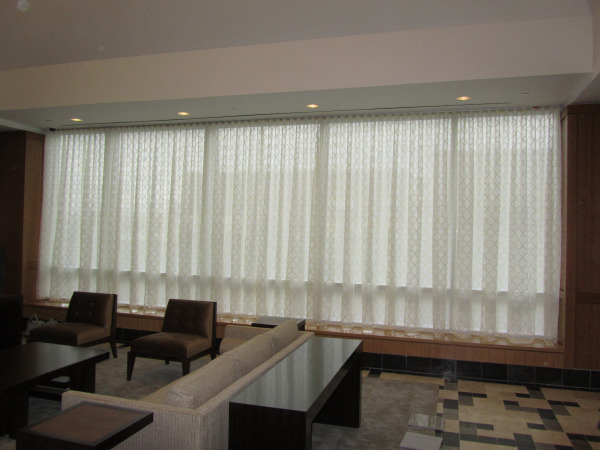
I have owned and run a drapery and upholstery workroom for the past 25 years. What I have seen over and over again is poor design planning, where the A/D hustles through the details of the drapery project leaving potential problem areas unaddressed. The architectural and interior design firms that I work for are fortunately rescued from this doom because of my direct involvement; others I surmise are not, and the results are very costly mistakes.
In this guide (and in my course I offer as an AIA Provider) I will address what I consider to be the necessary ways to communicate successful drapery design. I have broken them down into a two step process of Design and Documentation, with the ultimate goal of having a better grasp on how to communicate effectively what the client’s expectations are and then matching them up with what is ultimately fabricated and installed. This is done by allowing the A/D to be able to identify the critical areas with careful planning in order to avoid surprises and to feel comfortable in specifying hardware, mechanisms, structural pockets and fabrics. For the A/D the two areas of Design and Documentation all need to be addressed in the planning stage.