Subscribe via E-mail

Your email:

AIA Courses and Book

neil

Registered Provider Program Summaries

An Architect's Guide to Solar Shades

Approved AIA/CES Credit for HSW Sustainable Design

Read more>

An Architects Guide to Sustainable Window Coverings

Approved AIA/CES Credit for HSW Sustainable Design

Read more>

An Architect's Guide to Sustainable Draperies

Approved AIA/CES Credit for HSW Sustainable Design

Read more>

Communicating Successful Drapery Design

Approved AIA/CES Credit

Read more>

A Designer's Guide to Sustainable Window Coverings

Approved IDCEC HSW

Read more>

The Designer's Coach Book

Read About It Here>

Drapery & Window Covering Blog

Current Articles | RSS Feed RSS Feed

Light Control


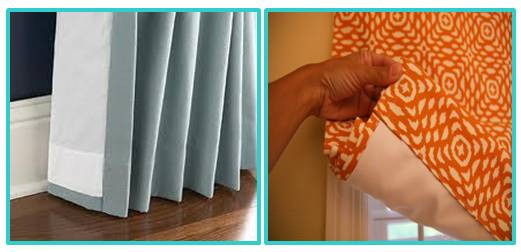
The amount of light transmitted through a drapery treatment is the next subject. Basically there are two options: Light filtering or blackout. Many treatments can either be unlined or lined with a translucent lining. For certain areas such as bedrooms, blackout lining may be required.
          Both the SnapPleat Drapery and the Roman Shades can have any of the three options of unlined, translucent lining or blackout lining.
          There is a fourth lining option which is called interlining. This is a flannel lining that goes in between the face fabric and the lining fabric. There are a few reasons for interlining. It adds body to the treatment, it prevents silk fabric from sun rotting and it adds a third layer which acts as an insulator which I explain later.   
          There is also the option of using organic or bamboo linings and interlinings.
lining resized 600

Comments

This is helpful. What are the benefits of bemboo lining and interlining? I understand that they are more"green" so to say. Are there any other reasons to use them?
Posted @ Thursday, May 19, 2011 7:53 PM by Marina Goldberg Klima
Post Comment
Name
 *
Email
 *
Website (optional)
Comment
 *

Allowed tags: <a> link, <b> bold, <i> italics