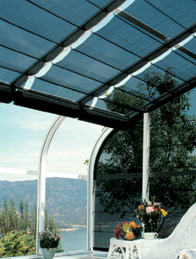
Daylighting shading systems work through redirecting the natural light to reduce the usage of artificial lighting and thereby reduce the energy used both for powering electric lights and energy used cooling the heat generated by the electric lights. However, using the daylight to accomplish this requires dynamic control over the solar energy entering the building for two reasons, the total solar energy transmitted to a typical window can exceed 1,300 watts per square meter and direct unfiltered sunlight is too bright for typical office interiors. The illuminance or intensity of the incident light, is measured in lux. Illuminance levels required for office work lie between 250 and 1,000 lux, with 500 lux being the generally preferred amount. Direct sunlight can produce illuminance levels of over 100,000 lux, far exceeding a comfortable amount.
A common strategy for harvesting this daylight is to redirect the light into areas where illuminance levels are supported with artificial light. For example, a passive or active light shelf can be both installed internally and/or externally along the upper portion of the glazing to catch and bounce the incident sun rays and direct them father into the space. Using a shelf with a high reflective or albedo value allows the light to be directed further into the space.
Glare control is perhaps the most common failure in daylighting strategies. Large windows provide generous amounts of daylight. If not controlled, properly, this daylight can produce unwanted glare and affect interior lighting quality. Successful measure to control glare is achieved through Decorating with Fabric’s SolarSmart Shading Systems.